Article: What Is a Hands-Free Hair Dryer? The Complete Guide
What Is a Hands-Free Hair Dryer? The Complete Guide
If you've ever wished you could dry your hair without spending ten minutes holding a machine at head height, the product category you're looking for is a hands-free hair dryer: a dryer that supports itself (on a stand, a tripod, or a wall mount), so the airflow stays aimed while both of your hands stay free. Simple idea. Surprisingly recent as a mainstream option. Here's the complete picture.
What counts as hands-free?
The term gets used loosely, so let's sort the actual categories:
Bonnet and hood dryers are the oldest form: you sit under them, salon-style. Genuinely hands-free, but stationary, bulky, and built for setting styles rather than everyday rough drying.
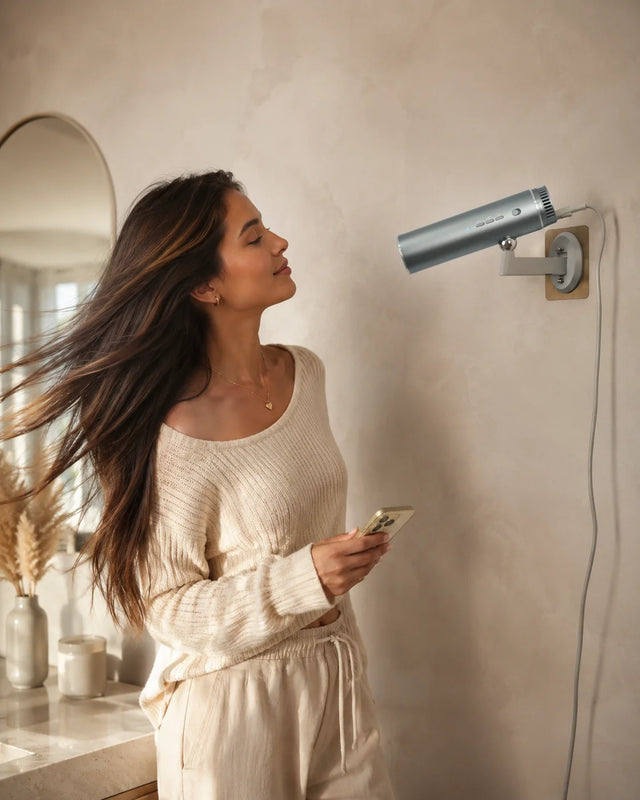
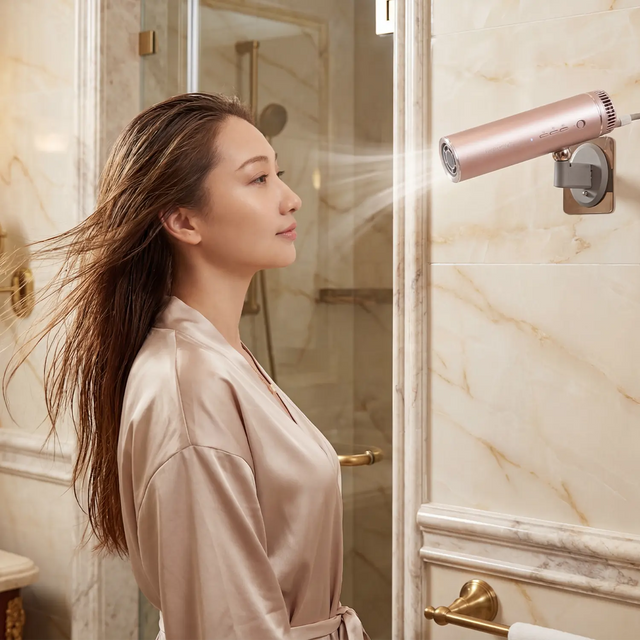
Wall-mounted dryers are the hotel-bathroom kind. Fixed position, fixed height: fine for a quick blast, hopeless for actually styling, since your head has to do all the traveling to a mount that never moves.
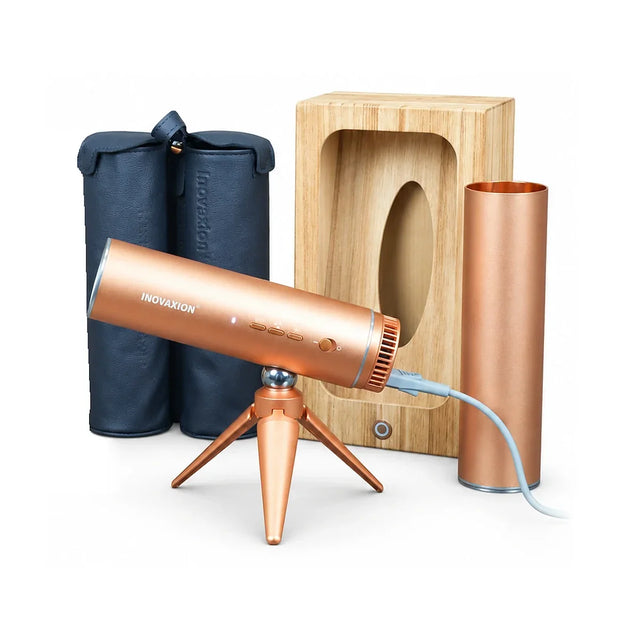
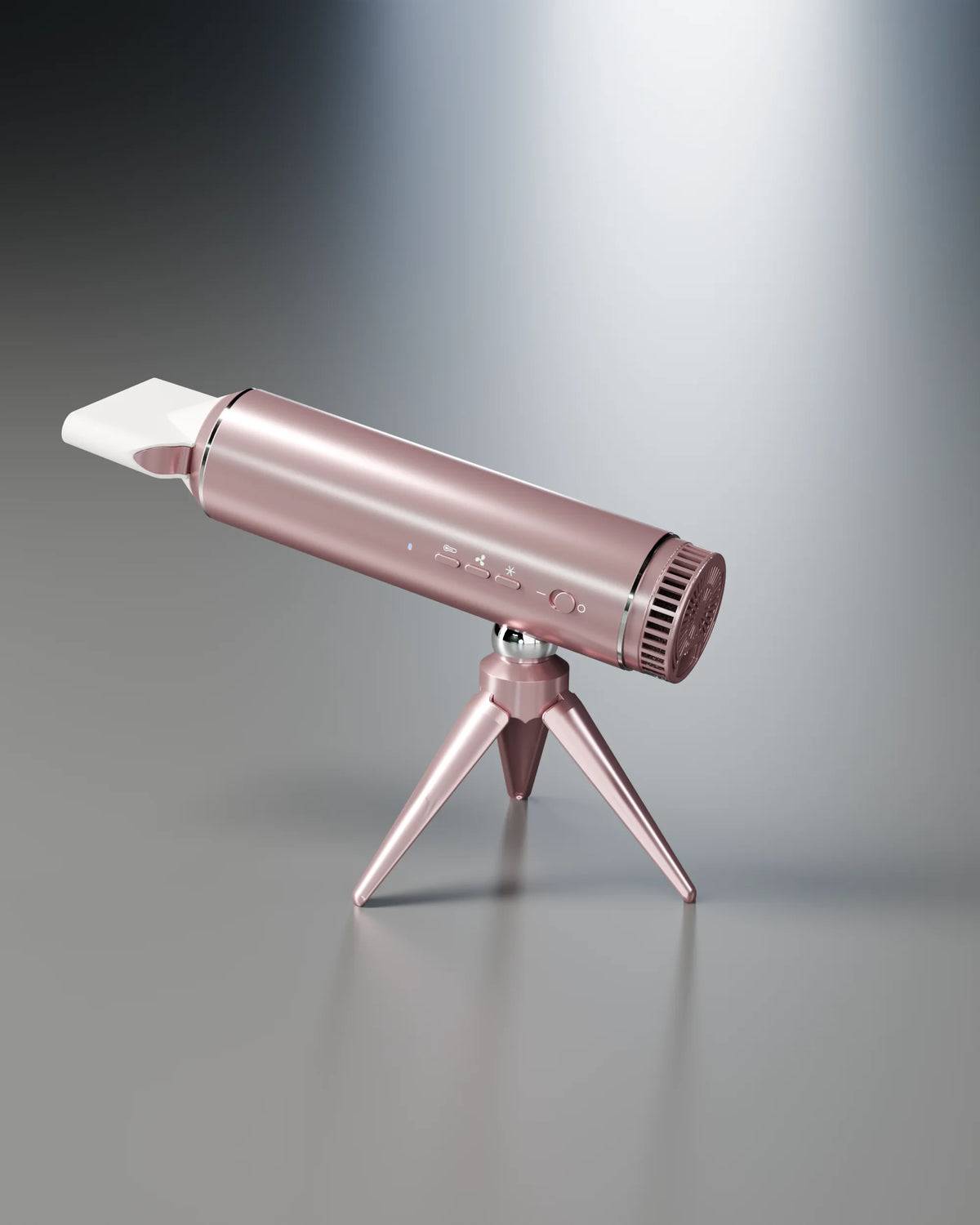
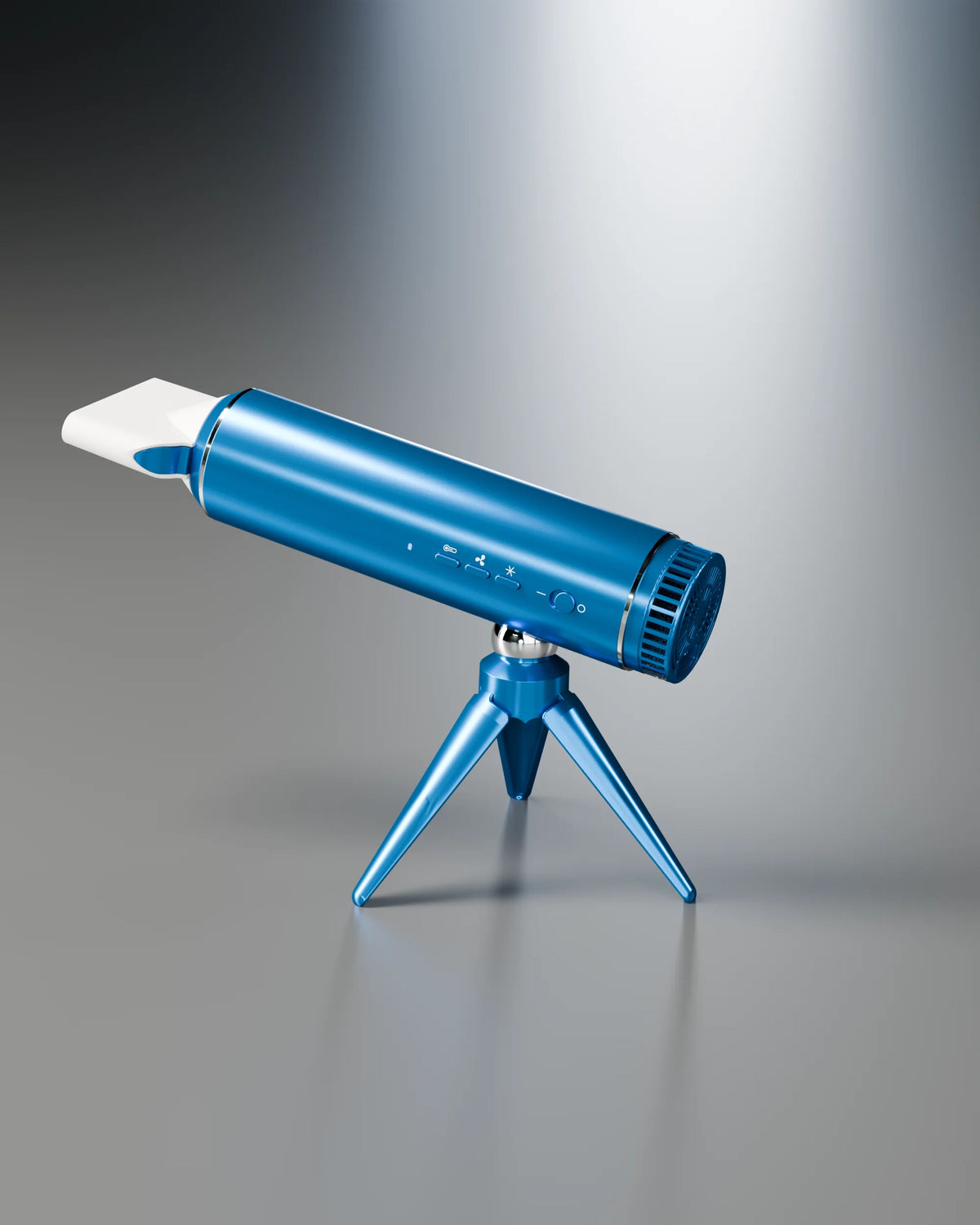
Stand and tripod systems are the modern answer: a dryer that attaches to an adjustable mount, holds whatever height and angle you set, and, in the best designs, detaches in a second to work as a normal handheld. This is the category that finally made hands-free practical for daily drying, and it's the kind we use for every guide on this site: the LeLunar HandsFreeDryer, which snaps onto its tripod magnetically.
Why bother? The technique argument
Here's what surprised us when we started testing: hands-free isn't mainly a convenience feature. It's a quality feature. Every rule of proper drying, the ones in our science guide, depends on things a held dryer slowly ruins:
Distance. Safe drying happens around 15 cm from the hair. A held dryer starts there and drifts closer as your arm tires; a mounted dryer stays where you put it for the entire session.
Angle. Airflow should point down the strand, root to tip, to lay the cuticle flat. Set once on a stand; renegotiated every second in your hand.
Two hands. Sectioning and brush tension, the actual skills behind a salon blowout, need both hands. With a handheld dryer, one of them is permanently occupied.

Who gets the most out of it
Multitaskers, first and most obviously, skincare, makeup, breakfast, a toddler: drying stops blocking everything else. Anyone chasing salon results at home, because the round-brush blowout is a two-handed job, full stop. And, the group we hear from most, people with limited mobility: arthritis, frozen shoulder, injuries in recovery, tremor, chronic fatigue. For them a self-supporting dryer isn't an upgrade; it's the difference between doing their own hair and needing help. We wrote about that side in depth in the ergonomics guide.
What to check before you buy
The mount itself. This is the whole product. Look for genuinely adjustable height and angle, stability on a counter, and a quick attach/detach: magnetic mounting is the gold standard, because a fiddly clamp means you'll stop using it.
Dual-mode design. Some days you just want a normal dryer. A good hands-free unit works handheld without compromise; if it only lives on its stand, it's a bonnet dryer in disguise.
Airflow over raw heat. A strong motor moving lots of air dries faster at lower temperatures, which is the entire trick of damage-free drying. Look for multiple heat and speed settings and, non-negotiably, a true cool-shot mode.
Weight, in both directions. Light enough for comfortable handheld use, but with a mount stable enough not to tip when you bump the counter.
Warranty and returns. A newer category means newer brands: a serious one backs the product. (For what it's worth, the LeLunar HandsFreeDryer ships with a two-year guarantee and 30 days to return.)
The short answer
A hands-free hair dryer is a dryer that holds itself so your hands can do the styling, or nothing at all. The technology finally matured past the salon hood: adjustable, magnetic, dual-mode, at home on a bathroom counter. Whether you come to it for the convenience, the blowout, or because your shoulder insisted, the result is the same: the ten minutes of drying stop being a workout and start being the easiest part of getting ready.
Want the technique to go with the tool? Start with the science of drying and the seven mistakes: between the three articles you'll have the whole playbook.